What Do We Call the People Who “Write Music” With a Prompt?
And other questions the industry would rather shout over than sit with.
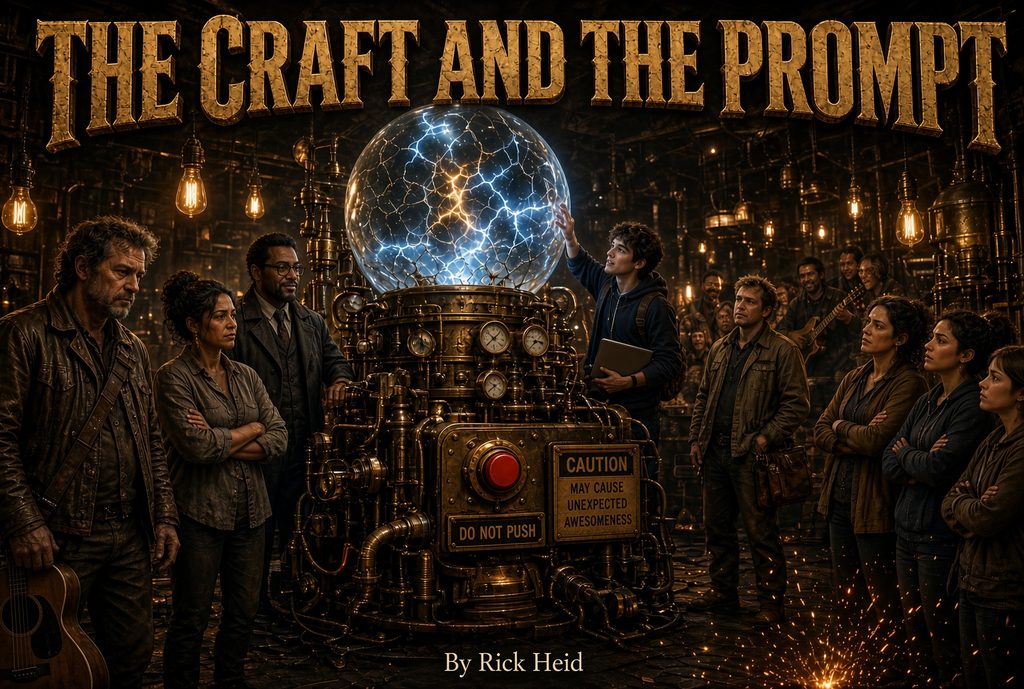
There’s a kid with musical genes. There always was. Now there’s also a kid with a laptop, a subscription, and a sentence.
“Make a late-night soul groove, female vocal, 92 BPM, something that sounds like it belongs in a car at 1 a.m.”
Thirty seconds later, something comes out that would have taken a room full of people a week in 1994. So what do we call the person who typed that?
Songwriter?
Producer?
Prompt jockey?
A&R with a cursor?
Tourist?
The word matters because the feeling behind the word matters. A lot of people who actually suffered for the craft feel cheated. That claim is not unjustified. They spent years learning how to make a chord change land, how to leave space, how to fail in public. Then someone arrived with a paragraph and a credit card and started occupying the same playlists.
Vanity is in the mix too. Some of the loudest outrage is less “this is theft” and more “this used to be hard, and that hardship was the badge.” Fair. Also incomplete.
The revenue piece is real. People are losing work. Session players. Jingle writers. The cheap end of the industry that used to pay rent with “good enough” tracks. Recording rooms that already took a beating when affordable DAWs and audio interfaces showed up are now watching a new wave of “why rent the room?” walk in the door. If you poured passion and money into a studio, you are allowed to be angry. That isn’t nostalgia. That’s a business that got smaller.
Then there are the stream farmers. Five AI slop tracks before lunch. Flood the pipes. Game the platforms. Dilute the places where actual listening used to happen. That part is ugly no matter which side of the moral argument you sit on. It doesn’t require a philosophy degree. It’s just pollution.
And hanging over all of it is a quieter fear: that the audience’s ear will change. Not “taste is subjective.” Something coarser. That “good” becomes whatever is frictionless and familiar enough to skip past. If that happens, the argument stops being about opinion and starts being about the floor dropping out from under the craft.
Remember the early MIDI days before you decide this is brand new.
I built backing tracks on an IBM 286 running DOS, a Midiman card, and a Casio keyboard. Sometimes one note at a time with a mouse. Then I went out and did solo gigs with those tracks. Before “using tracks” became normal, some rooms rejected it on sight. Not just musicians. Live-music people. “You’re not a band.” “You’re cheating.” Drum machines got the same speech. So did sequencers. So did the first cheap interfaces that let a kid make a record in a bedroom.
Some of those complaints were about dignity. Some were about jobs. Some were about the feeling that a room with humans in it was being replaced by a box. All of that was true at once. The technology still stayed.
A guitarist’s bag of licks is a museum of everybody they grew up worshipping. You learn Hendrix whether you mean to or not. You steal a turnaround from a record you wore out. You spend twenty years turning other people’s fingerprints into your accent. Is that the same thing as training a model on a mountain of recordings and asking it to “make music”?
Not exactly.
Not entirely different either.
The live issue there is copyright. Influence is how music has always worked. Copying a catalog at industrial scale, without a license, and selling the output is a different animal. That’s why the fight isn’t really “is AI the devil.” The devil talk is lazy. The actual fight is who owns the training set, who gets paid, and who gets to keep the gate.
On the ground, the legal picture is messy and unfinished. The major labels, through the RIAA, sued Suno and Udio in 2024 for mass infringement. Then the usual trick started: litigate, settle the parts that can be turned into a license, keep control of the castle gate.
Universal settled with Udio in October 2025. Warner settled with Udio, then with Suno, and even sold Suno the Songkick business as part of the dance. Sony is still in court against both. Universal is still fighting Suno. Germany’s GEMA won a first-round ruling against Suno in Munich in July 2026; damages still to be set, appeal still in the air. Independent artists have their own cases. The musicians’ union turned around and sued Universal and Warner, arguing the labels licensed union recordings into these systems without paying the players who made them. So the “we’re protecting artists” speech and the “we just made a deal and kept the money” speech are now in the same building.
Nobody has a clean American fair-use ruling that settles training once and for all. That absence is doing a lot of work. In the meantime, the empires do what empires do: stay near the door. License what they can. Sue what they can’t. Announce that the future will be “responsible” as soon as the future is on their paper.
Outside the castle, a lot of modern musicians already noticed the air is better. A business-minded player who works, owns their recordings, talks to their people directly, and doesn’t wait for a permission slip can do just fine. Sometimes much better. They don’t have to suck up to someone for a break they may never get. That isn’t a manifesto. It’s just what happens when the old gate stops being the only way to eat.
Then there is the part the lawsuits cannot touch.
AI can assemble a song. It cannot be present in a room.
It cannot stand there, fallible, and project the emotion sitting inside a piece of music into a crowd that absorbs it and sends it back. That return is the whole trick. It cascades. It amplifies. For a few minutes everybody in the room becomes part of the same moment. The missed note that gets played off. The smile that runs across the front row because they saw you save it. That messy little human transaction is not in danger from a prompt. A model can imitate the sound of feeling. It cannot stand in the weather of it.
Which brings up the people everyone forgets to ask until the argument is already loud: the music lovers. The consumers. How are they responding?
It’s a mixed bag. I know that for a fact. My wife and two of my daughters were talking about it today. All three agreed they do not listen to AI music, and probably will not. I believe them. I also wonder if they already have and don’t know it. I bet they have. A lot of this stuff is already in the water. Playlists don’t come with a confession.
That is the uncomfortable middle. People will reject the idea of AI music and still hum something that may have been assembled by one. Principle and ear are not always on speaking terms.
Is writing a poem with prompts that different from using a word processor that corrects grammar, fixes spelling, and offers a better sentence? Is it that much of a stretch? Some people will say yes, obviously, because one is a tool and the other is a ghostwriter. Some will say no, because we have been accepting machine help in the making of language for decades and only started calling it a moral event when the machine got good. Both answers have a point. Neither one settles the room.
So where does that leave the prompt people?
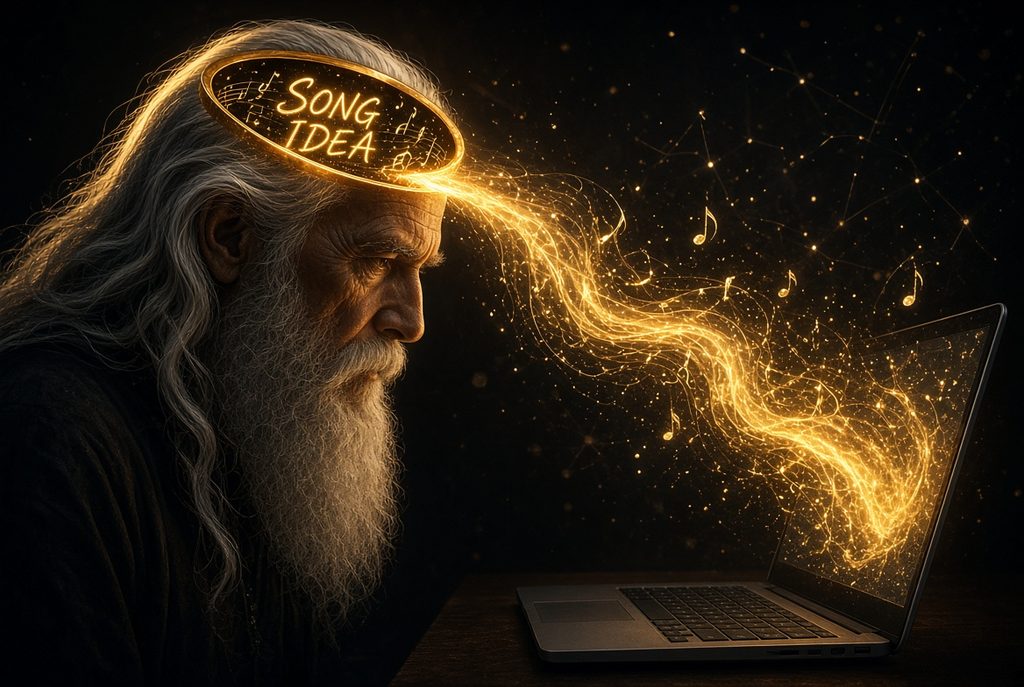
They are not automatically thieves.
They are not automatically artists.
They are not the death of music by themselves.
They are a new kind of operator in a market that was already strained by streaming math, playlist politics, bedroom studios, and a public that often wants the feeling of music more than the labor of it.
The players who paid dues have a real grievance.
The studios that got gutted twice have a real grievance.
The labels fighting to keep the catalog behind a tollbooth have a real strategy, and it looks a lot like the last ten strategies.
The prompt users who think they invented songwriting because a paragraph returned a chorus have a real delusion.
The musicians building lives outside the major-label compound have a real alternative.
The audience has a real right to be confused, loyal, hypocritical, and sincere all in the same week.
None of that requires you to pick a team.
Call the prompt people whatever you want. Just don’t pretend the disruption is only happening to one group, or that the people shouting the loudest are the only ones getting hit. The cheap end of the business is getting hit. The proud end is getting hit. The catalog owners are trying not to lose the keys. The audience is quietly deciding what “good” is going to mean next.
And the one thing still standing in the middle of all that noise is a person in a room, sending something out, getting it back, and briefly making strangers into a single moment.
That part is not a prompt.
That’s the part worth protecting by doing it.
